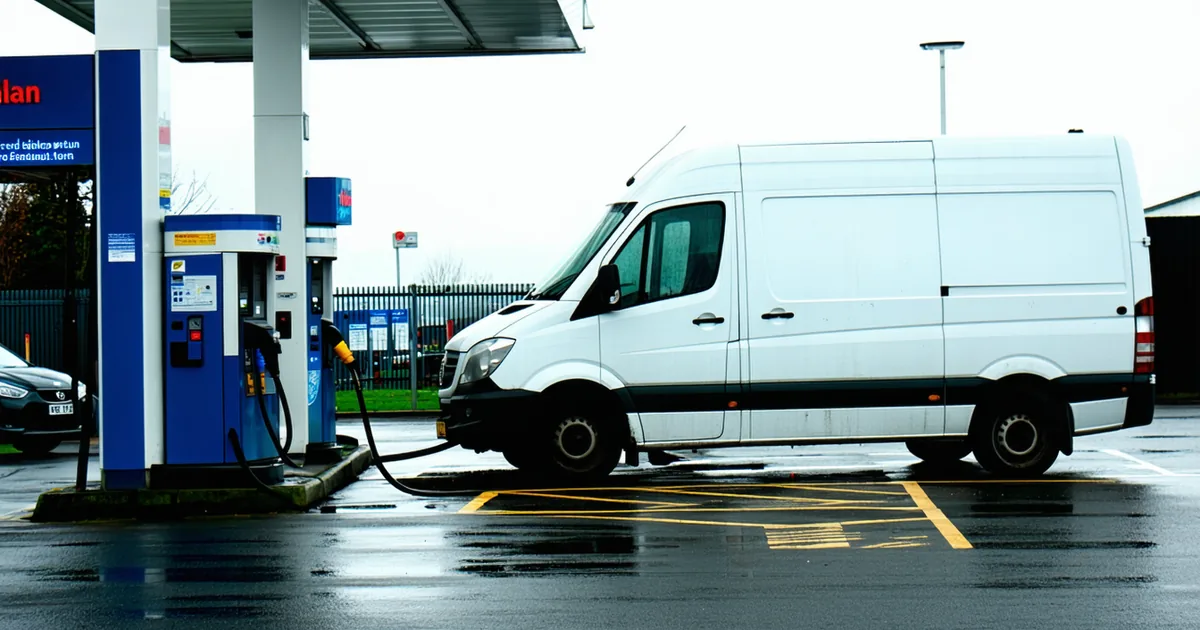
Fuel card fraud in van fleets rarely announces itself. It does not look like someone draining a tank in a car park at midnight. It looks like a 9% uplift in fuel spend on a handful of routes, or a handful of cards that consistently fill 5–8 litres more than the tank capacity of the assigned vehicle. It looks like normal until you look carefully — and most operators do not look carefully enough, because the card data is large and unstructured and sits in a separate system from everything else.
This article sets out a systematic approach to auditing fuel card data against VRM-level telematics. The goal is not to catch individuals — it is to establish a data discipline that identifies anomalies before they compound into significant losses.
The most common abuse patterns and what they look like in the data
Fuel card misuse in commercial van fleets tends to cluster around a small number of recognisable patterns. Understanding what you are looking for before you build your audit query is more useful than simply running generic exception reports.
Out-of-hours purchases
Your operation runs between, say, 06:30 and 19:00 on weekdays. A fuel purchase at 22:45 on a Tuesday should prompt a question. Occasional genuine reasons exist — a driver finishing a late run, a break-down recovery — but a card that consistently records purchases outside operating hours, particularly on weekends, has a pattern worth investigating. Out-of-hours transactions as a proportion of total transactions is a straightforward metric to surface from your fuel card provider's export; most will supply transaction timestamps to the minute.
Out-of-region purchases
Cross-reference the fuel station location against the vehicle's telematics GPS track for that day. A van registered to card holder assigned to a North Birmingham depot filling up at a forecourt in South Coventry — when telematics shows the vehicle was operating a 15-mile radius around Sutton Coldfield all day — is an anomaly. It does not necessarily mean the card was used by someone other than the driver; the driver may have lent the card or used it for a personal vehicle. Both are policy violations. The point is that location mismatch between purchase site and vehicle GPS track is a clean, automatable check.
Two fills within 30 minutes
Two fuel card transactions on the same card within 30 minutes, especially at different sites, is a strong anomaly signal. Genuine causes are essentially nil — a van tank is not large enough to require two sequential fills, and the logistics of driving from one forecourt to another within the window are impractical. This pattern almost always indicates either a second vehicle being fuelled on the card, or a transaction being re-run after a system error (which should be visible as a void on the original transaction).
Volume-versus-tank-capacity mismatch
Every van in your fleet has a documented fuel tank capacity — typically 60–80 litres for a standard panel van. If a card transaction records 85 litres being dispensed against vehicle BV21 KXG, which has a 72-litre tank, one of three things is true: the volume figure is wrong, the tank has been fitted with an auxiliary tank that your records do not show, or the card was used for a vehicle other than the one it is assigned to. This check requires tank capacity data per VRM, which should be in your vehicle records; many operators have this only at the model level rather than the individual vehicle level, which is the first gap to close.
Cross-referencing card data against telematics odometer
The most reliable fuel card audit method is to calculate implied fuel consumption from card transaction volumes and compare it to calculated fuel consumption from telematics mileage. The formula is simple:
Implied MPG = (Miles driven per telematics) ÷ (Litres dispensed per card ÷ 4.546)
Compare implied MPG per VRM against the manufacturer's specification for that vehicle variant and against your fleet's observed mean for that vehicle type. A vehicle consistently showing implied fuel economy 25–35% better than its published specification is probably having its card used for partial fuel elsewhere. A vehicle showing implied economy 30–40% worse than specification warrants investigation for either driving behaviour or vehicle condition issues — but may also indicate card transactions being attributed to the wrong vehicle.
This reconciliation requires telematics mileage data to be exported and joined to fuel card transaction data by date range and VRM. It is not a complex join technically, but it requires a data feed from two systems that typically do not share a common identifier. Vehicle registration mark is the natural join key; ensuring your fuel card platform uses consistent VRM formatting (no spaces versus spaces, uppercase) is a frequently overlooked data hygiene step.
Identifying VRMs rather than drivers as the unit of analysis
Most fuel card audit tools are built around the card holder — the named driver. This creates a structural problem for fleets with driver rotation, pool vehicles, or sub-contracted routes. The vehicle registration mark is a more stable audit unit than the driver because the vehicle is always assigned to a single card at any given time, whereas the card holder may change without a system update, the vehicle may be driven by a different person to the card holder on any given day, and personnel records and fuel card assignments frequently fall out of sync in busy operations.
Auditing by VRM rather than by driver name means you surface anomalies on the vehicle regardless of who the card is nominally assigned to. Vehicle YK73 RHD showing a consistent pattern of out-of-hours purchases over three months is a VRM-level finding — the next step is to identify who was driving that vehicle during those periods, which is a subsequent investigation step rather than the initial detection step.
What a monthly audit cadence looks like in practice
Fuel card data arrives monthly from most providers, sometimes more frequently. A practical audit cadence for a fleet of 150–250 vans:
- Weekly automated flags: Out-of-hours purchases and two-fills-within-30-minutes. These are simple threshold rules that should generate an exception list automatically, not require manual review.
- Monthly reconciliation: MPG reconciliation per VRM using telematics mileage for the prior month. Sort by variance from expected; investigate any vehicle showing more than 20% deviation in either direction.
- Quarterly deep audit: Out-of-region check (fuel station location versus GPS track), volume versus tank capacity check, and card-holder-to-vehicle assignment audit (are all cards assigned to the correct VRMs in your fuel card portal?).
The weekly and monthly checks are largely automatable once the data feeds are connected. The quarterly check requires more manual review but covers the patterns that do not show up in high-frequency data.
Fleet operators who have not run a structured fuel card audit before often find the first pass produces a handful of clear anomalies that have been running undetected for months. We're not saying widespread fraud is present in most fleets — the majority of anomalies on first audit turn out to have benign explanations: legitimate auxiliary tanks, system error duplicates, card assignments that were updated in one system but not another. The value of the audit is establishing a baseline and a cadence so that genuine anomalies are caught within weeks rather than after compounding for a full financial year.
Once the cadence is in place and the data joins are working, a fuel card audit becomes a 90-minute monthly task rather than a project. The initial setup is where most of the work sits — specifically, getting VRM-consistent data out of both your telematics platform and your fuel card portal and into a format that can be joined reliably.