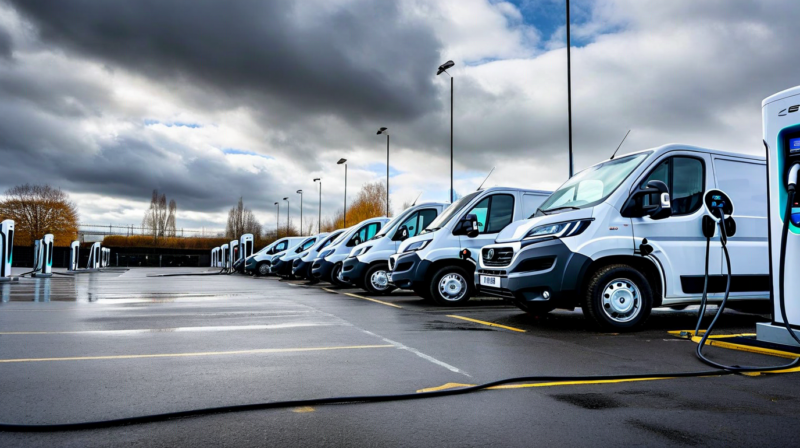
Hydrogen fuel cell vehicles have moved from concept to commercial deployment over the past two years. Hyundai, Toyota, and a growing list of HGV manufacturers have working hydrogen commercial vehicles on UK roads. The government's Hydrogen Strategy and ZEHID (Zero Emission HGV and Infrastructure Demonstrator) programme have created real impetus. If you're running a medium or large commercial fleet, hydrogen is probably on your agenda. Whether you're actually ready for it is a different question.
Check 1: Do you have the route and duty cycle data to know which vehicles are candidates?
Hydrogen fuel cell vehicles have a genuine advantage over battery electric in specific use cases: long-range high-payload operations where battery weight and charging time are limiting factors. For a fleet running 300+ mile day-return routes with heavy loads, hydrogen is a serious option. For a fleet running 80-mile urban delivery loops, it almost certainly isn't.
The starting point for any hydrogen readiness assessment is therefore data, not enthusiasm. You need reliable per-vehicle duty cycle data: route length, payload, idle time, and refuelling window. Without that, you can't identify which vehicles in your fleet are genuine hydrogen candidates and which should go electric or stay diesel.
In practice, many fleets can't immediately produce this data at the vehicle level. Telematics may give route data but not payload. Payload data may exist in the transport management system but not be linked to vehicle identifiers. Duty cycle analysis requires combining data sources that have never been connected. This is work worth doing regardless of whether you're pursuing hydrogen -- it has direct applications to optimising your existing fleet operations -- but it's a prerequisite, not a nice-to-have, for a meaningful hydrogen strategy.
Check 2: Is there fuelling infrastructure within your operational geography?
The UK hydrogen refuelling infrastructure for commercial vehicles is growing but remains limited. As of late 2025, there are operational or committed high-pressure hydrogen refuelling stations at a small number of locations, concentrated around the M62/Yorkshire corridor, the Port of Tilbury area, and with planned expansion along key logistics corridors.
Before committing to hydrogen vehicles, map your operational routes against the current and committed refuelling network. The key question isn't "is there a station in the country?" but "can my vehicles complete their routes and refuel within their operational window?" A 700km range vehicle that needs to pass through an area with no accessible refuelling capability is a stranded asset, regardless of what the range specification says.
This is an area where the infrastructure is genuinely developing rapidly. The picture in 18 months will be different from today. But for near-term fleet planning cycles -- vehicles you're procuring now for delivery in 12-18 months -- today's infrastructure picture is the relevant one.
"Hydrogen readiness is a data question first, a technology question second. Know your routes before you commit to a fuel type." — ExoFleets Team
Check 3: Can your data infrastructure handle a new fuel type?
Hydrogen cost accounting is currently an unsolved problem for most fleet management systems. The unit of measurement (kg), the pricing structure (variable by location, often contract-based), and the absence of standardised billing formats mean that hydrogen costs are typically tracked manually or not at all.
This matters for two reasons. First, if you can't track hydrogen costs accurately, you can't calculate the true cost per mile for those vehicles -- which means you can't make informed decisions about whether to expand or contract the hydrogen portion of your fleet. Second, your emissions reporting obligations require fuel-type-specific consumption data. Hydrogen has a Scope 1 emissions factor of effectively zero (at the vehicle exhaust), but your supply chain Scope 3 figures depend on the production pathway of the hydrogen you're buying. Green hydrogen (electrolysis from renewables) is very different from grey hydrogen (steam methane reforming) in emissions terms.
Checking whether your fleet management system has a hydrogen cost category and a mechanism to accept kg-based consumption data before you take delivery of hydrogen vehicles is basic operational preparation. You'd be surprised how many operators have skipped this step.
The readiness summary
Hydrogen readiness isn't binary. There's a spectrum from "we've never thought about it" to "we have a detailed transition plan with vehicles on order." The three checks above tell you where you genuinely are on that spectrum, rather than where your technology vendor's sales pitch implies you are.
If you pass all three -- you have duty cycle data, your routes overlap with infrastructure, and your systems can handle the fuel type -- then a hydrogen pilot programme is worth exploring seriously. If you're missing one or two, the work to close those gaps is well-defined and often has value beyond the hydrogen question.
ExoFleets's platform is built to handle multi-fuel cost management including hydrogen. Talk to our team about how we support hydrogen fleet data from day one.